All Things Branding Explained: A Complete Glossary
From "brand" to "brand equity" - understand the essential terminology that shapes how businesses build recognition, trust, and lasting connections with their audiences.
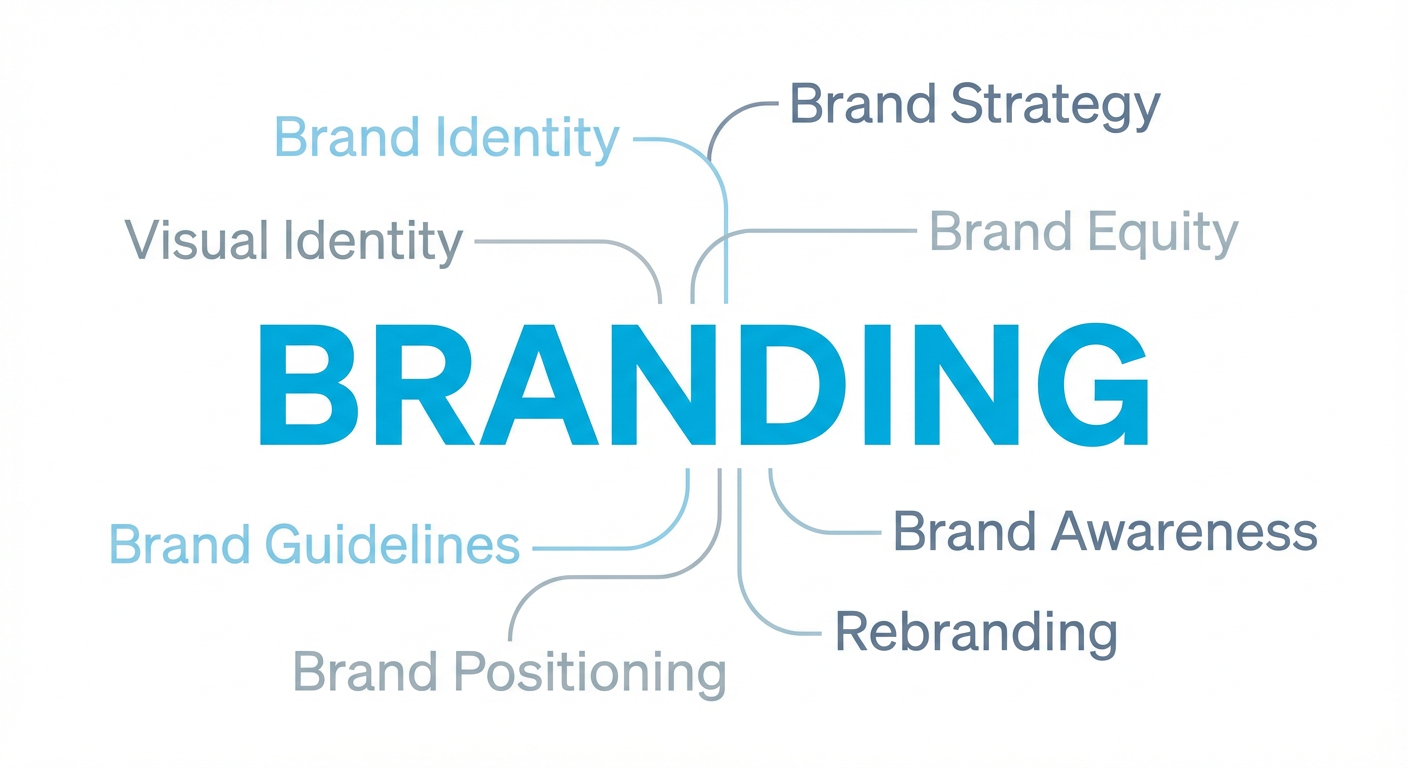
Whether you're building a new business or refining an existing one, understanding branding terminology is essential. This glossary breaks down the key concepts you'll encounter when developing your brand, from foundational terms like "brand" and "branding" to more advanced concepts like "brand architecture" and "brand equity."
What is a Brand?
A brand is the perception people have of your company, product, or service. It's the sum of all experiences, emotions, and associations that come to mind when someone encounters your business. A brand exists in the minds of your audience - it's not just a logo or name, but the entire feeling and reputation your business evokes.
What is Branding?
Branding is the process of shaping and managing how your brand is perceived. It involves creating a distinct identity through visual elements, messaging, and experiences that differentiate your business from competitors. Branding is an ongoing strategic effort to build recognition, trust, and emotional connections with your target audience.
What is Brand Identity?
Brand identity is the collection of visual and verbal elements that represent your brand. This includes your logo, color palette, typography, imagery style, tone of voice, and messaging. Brand identity is what you can control and create - it's the tangible expression of your brand that you put out into the world.
What is Visual Identity?
Visual identity is the visual aspect of your brand identity - specifically the graphical elements that represent your brand. This includes your logo, color palette, typography, photography style, illustrations, icons, and any other visual elements. Visual identity is what makes your brand instantly recognizable across all touchpoints.
What are Brand Guidelines?
Brand guidelines (also called a brand style guide or brand standards) are a comprehensive document that defines how to represent your brand consistently. They include rules for logo usage, color specifications, typography standards, imagery guidelines, and tone of voice. Brand guidelines ensure everyone who works with your brand - internal teams and external partners - creates consistent, on-brand materials.
What is Brand Strategy?
Brand strategy is the long-term plan for developing and positioning your brand to achieve specific business goals. It defines your brand's purpose, values, target audience, competitive positioning, and messaging framework. Brand strategy guides all branding decisions and ensures consistency across marketing efforts.
What is Brand Positioning?
Brand positioning is how you differentiate your brand in the minds of your target audience relative to competitors. It's the unique space your brand occupies in the market - the specific value proposition and associations that set you apart. Effective positioning answers: "Why should customers choose us over alternatives?"
What is Brand Voice?
Brand voice is the distinct personality and style your brand uses in all communications. It encompasses your vocabulary, tone, rhythm, and the emotional quality of your messaging. A consistent brand voice helps build familiarity and trust with your audience across all channels - from website copy to social media to customer service.
What is Brand Equity?
Brand equity is the commercial value derived from consumer perception of your brand. It's the premium people are willing to pay for your branded product over a generic alternative. Strong brand equity means higher customer loyalty, the ability to charge premium prices, and greater resilience during market challenges.
What is Brand Awareness?
Brand awareness is the extent to which consumers recognize and recall your brand. It ranges from simple recognition ("I've heard of that brand") to top-of-mind awareness (being the first brand someone thinks of in a category). Building brand awareness is often the first step in the customer journey.
What is Brand Architecture?
Brand architecture is the organizational structure of brands within a company. It defines how parent brands, sub-brands, and product brands relate to each other. Common models include: branded house (one master brand for everything), house of brands (separate distinct brands), and hybrid approaches.
What is Rebranding?
Rebranding is the process of changing your brand's identity, positioning, or strategy to reflect a new direction. This can range from a visual refresh (updated logo and colors) to a complete overhaul including new name, messaging, and market positioning. Rebranding is typically undertaken to stay relevant, reach new audiences, or distance from negative associations.
Build Your Brand Identity
Now that you understand branding terminology, create your own brand guidelines. Upload your logo and get a complete style guide in minutes.
Try Guidelines.online FreePutting It All Together
Understanding these branding terms is the first step toward building a strong, consistent brand. Here's how they connect:
- Your brand strategy defines your purpose, audience, and positioning
- Your brand identity (including visual identity and brand voice) expresses that strategy tangibly
- Your brand guidelines document these elements so they're applied consistently
- Consistent branding builds brand awareness
- Strong awareness combined with positive experiences creates brand equity
- High brand equity allows your brand to command premium pricing and customer loyalty
Whether you're starting from scratch or refining an existing brand, having clarity on these concepts will help you make better decisions and communicate more effectively with designers, marketers, and stakeholders.
Ready to see these principles in action? Check out our collection of 19 real-world brand guidelines examples from companies like Audi, Starbucks, and Spotify.